Pressure Washing vs. Soft Washing: Which Does Your Property Actually Need?
Pressure washing uses high force water, typically 1,500 to 4,000 PSI, to physically blast dirt and stains off dense, hard surfaces like concrete and brick. Soft washing uses low pressure water, generally under 500 PSI, combined with a specialized cleaning solution that treats algae, mold, and mildew at the source rather than just knocking the surface layer off. Most Jacksonville properties need both — pressure washing for the driveway and hardscape, soft washing for the roof, siding, and anything painted or delicate.
Get a Free EstimateAt a Glance
The Core Difference, in One Table
Using the wrong method on the wrong surface is one of the most common — and most expensive — mistakes in exterior cleaning.
| Pressure Washing | Soft Washing | |
|---|---|---|
| Typical pressure | 1,500 to 4,000 PSI | Under 500 PSI, often 150 to 300 PSI in practice |
| How it cleans | Force of the water alone | A cleaning solution does the work; water rinses it away |
| Best for | Concrete, brick, pavers, hardscape | Roofs, siding, stucco, screens, painted surfaces |
| Risk if misused | Etching concrete, if pressure or distance is wrong | Minimal misuse risk; the main failure mode is under-diluting or over-diluting the chemical |
| Treats organic growth at the source | Not reliably | Yes |
Chemistry
What’s Actually in a Soft Wash Solution
A soft wash mix typically combines sodium hypochlorite (the same active ingredient in household bleach, at a diluted concentration), surfactants that help the solution cling to and penetrate the surface, and often an algaecide for extra strength against stubborn growth. Many professional soft wash operations also add a neutralizer either during or after application, specifically to reduce the impact of bleach runoff on plants, grass, and the surrounding soil.
This is why a proper soft wash job protects landscaping before starting, and why some runoff management matters even with a biodegradable-leaning solution — the chemical itself is still active until it’s neutralized or fully diluted.
The exact concentration varies by surface and by the severity of the growth being treated, which is part of why soft washing is a skill, not just a matter of turning down the pressure on a regular washer.
Terminology
Power Washing vs. Pressure Washing: There’s Actually a Real Difference
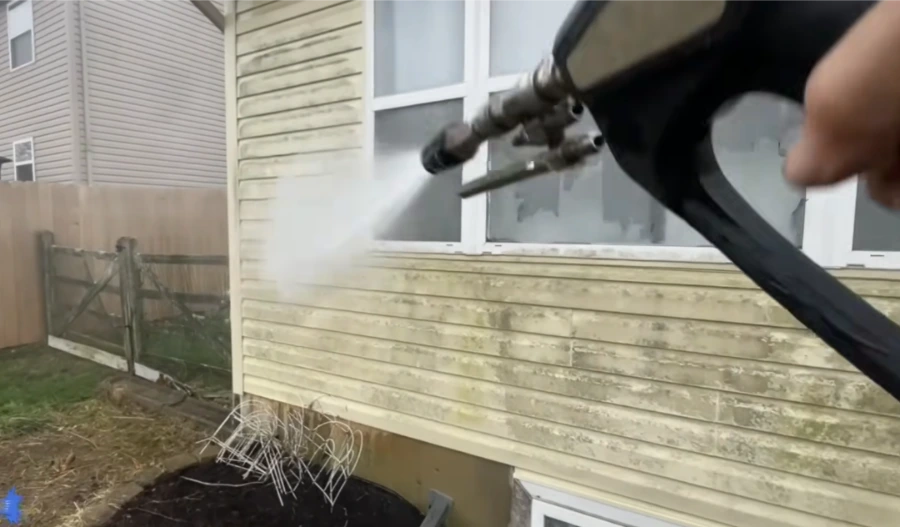
In everyday conversation and in how people search for this service, “power washing” and “pressure washing” are used interchangeably, and for practical purposes on this page and across our services, they mean the same thing. But there is a genuine technical distinction worth knowing: pressure washing uses cold water at high pressure, while power washing technically refers to the same high pressure delivered with heated water.
The heat in power washing helps cut through grease and oily buildup faster, which is part of why commercial kitchens, dumpster pads, and industrial surfaces sometimes call specifically for hot water equipment. For a residential driveway or a home exterior, the distinction rarely changes which service you’d book, but it’s a real difference in the equipment, not just marketing language.
Risks
Why the Wrong Method Causes Real, Expensive Damage
This isn’t a theoretical concern. High pressure water on the wrong surface causes damage that often doesn’t show up until later:
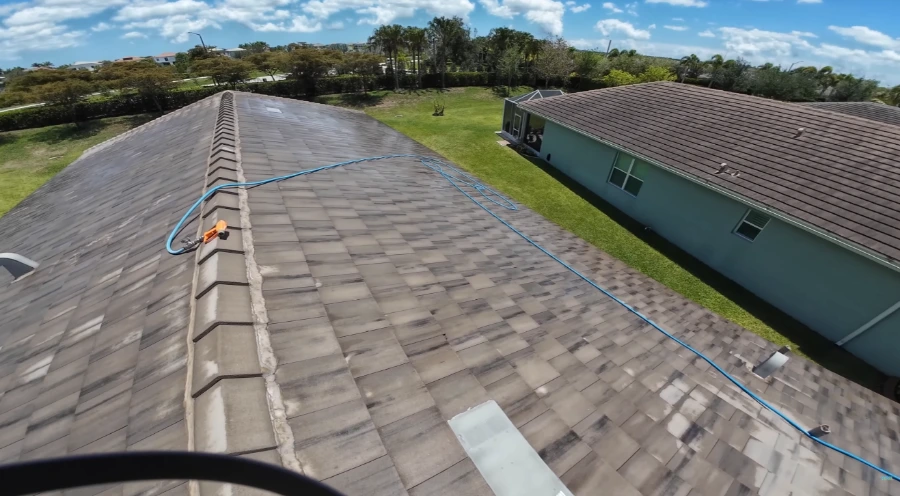
- Asphalt shingle roofs. High pressure strips the granules that protect the shingle from UV damage. Once they’re gone, they don’t grow back, and many shingle manufacturers’ warranties are voided by pressure washing specifically because of this. See our roof cleaning page for the soft wash approach.
- Vinyl siding. High pressure can crack or warp vinyl panels, or force water up behind them, leading to hidden moisture damage that isn’t visible until mold or rot develops. We cover this in detail under house washing.
- Stucco and EIFS (synthetic stucco). Both are porous and can be eroded or left blotchy by high pressure.
- Concrete. The wrong pressure or the wrong distance from the surface can etch or scar concrete permanently. This is real even though concrete is a pressure washing surface — calibration still matters on driveways and hardscape.
- James Hardie fiber cement siding. James Hardie’s own care bulletin technically permits pressure washing, but only under tightly controlled conditions: a wide fan tip, a minimum of 6 feet from the wall, and under 1,500 PSI. Get any of those wrong and you risk forcing water behind the panels or damage that may not be covered under warranty. Most professionals recommend soft washing Hardie siding anyway.
Hybrid Approach
Why Concrete Often Gets Both
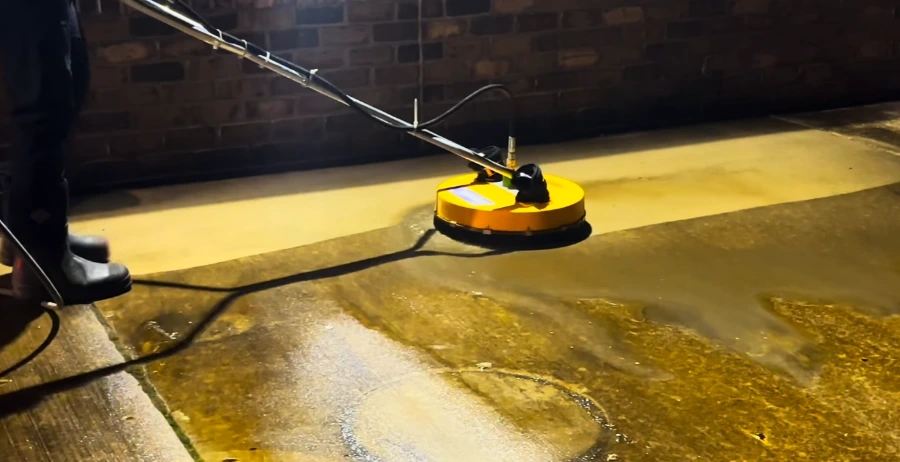
Concrete and pavers are true pressure washing surfaces, but the best results usually come from combining both methods rather than relying on water force alone. Applying a cleaning solution to organic staining and oil residue before pressure washing breaks down the grime chemically first, so the pressure washing step lifts it away rather than fighting it with force alone.
This is especially true for algae staining on concrete, which, like on a roof, is a living growth that regrows faster if only the visible layer is blasted off rather than treated at the source. That’s how we approach most driveway and concrete cleaning jobs in Jacksonville.
Pricing
Cost: Why Soft Washing Sometimes Costs More Upfront
Soft washing services are sometimes priced slightly higher than a comparable pressure washing job. This isn’t padding — it reflects genuinely different equipment and expertise. Soft wash pump systems need to be built from chemical-resistant materials, since standard pressure washer pumps corrode quickly when exposed to sodium hypochlorite and other soft wash chemicals over time.
Combined with the additional skill required to dilute and apply the solution correctly, the specialized equipment adds real cost that a simple high pressure setup doesn’t carry. The tradeoff is that treating organic growth at the source, rather than just rinsing the surface, generally means slower regrowth between cleanings — though in Jacksonville’s climate specifically, some regrowth over time is still normal and expected, not a sign the job was done wrong.
DIY Reality Check
Why DIY “Soft Washing” Tutorials Are Often Misleading
There’s a lot of content online describing soft washing as simply mixing bleach and soap and running it through a rented pressure washer at a lower setting. That isn’t true soft washing. Proper soft washing uses purpose-built low pressure pumps, correct chemical dilution ratios for the specific surface and growth severity, and equipment made from materials that won’t corrode from the chemicals involved.
A consumer pressure washer wasn’t designed for that chemical exposure, and getting the dilution wrong in either direction — too weak to work or too strong and risking damage to landscaping and surfaces — is a real risk for anyone attempting it without training.
Runoff
Environmental Considerations
Soft wash solutions are generally described as biodegradable, but that doesn’t mean runoff is automatically harmless. Bleach-based solutions are still active chemically until they’re diluted, neutralized, or broken down, which is why responsible operators protect landscaping before starting, use neutralizing agents where appropriate, and manage runoff rather than letting it flow freely into storm drains, plant beds, or waterways.
Jacksonville’s own stormwater regulations restrict discharging wash water containing detergents or chemicals into the city’s storm sewer system without proper containment, which applies to both pressure washing and soft washing runoff.
Industry
A Note on Where the Industry Is Headed
Some exterior cleaning companies, mostly in large commercial and multi-story markets, have started using drone-mounted soft wash and pressure wash systems to reach tall buildings without scaffolding or lifts. This is a genuinely emerging part of the industry, though it’s currently concentrated in large commercial applications rather than typical residential work. For a Jacksonville home or small commercial property, ground-based soft washing and pressure washing remain the standard, appropriate approach — including for commercial exteriors we serve locally.
Our Process
How We Decide Which Method Your Property Needs
Every job starts with an assessment of each individual surface, not a single default setting applied to the whole property. Roofs, siding, stucco, and screens get soft washed. Concrete, brick, and pavers get pressure washed, often with a chemical pre-treatment first. Most Jacksonville properties need both services in the same visit, since a typical home has both types of surfaces.
Soft Wash Surfaces
Roofs, siding, stucco, screens, painted finishes, and James Hardie when we want zero warranty risk.
Pressure Wash Surfaces
Driveways, walkways, pool decks, brick, pavers, and other dense hardscape.
Usually Both
A full exterior clean in Jacksonville typically combines soft washing for the house and roof with pressure washing for concrete — quoted as one visit, not two separate companies.
FAQ
Frequently Asked Questions
What’s the actual PSI difference between pressure washing and soft washing?
Pressure washing typically runs 1,500 to 4,000 PSI. Soft washing runs under 500 PSI, with most professional soft wash equipment operating in the 150 to 300 PSI range during actual application.
Is soft washing just pressure washing with the pressure turned down?
No. Soft washing relies on a specialized cleaning solution to treat organic growth at the source, with the low pressure water mainly there to apply and rinse the solution. A consumer pressure washer with the pressure turned down isn’t the same as purpose-built soft wash equipment, and the chemistry — not the water pressure — is what actually does the cleaning.
Is power washing the same as pressure washing?
For practical purposes and in how most people search for this service, yes. Technically, power washing refers to pressure washing with heated water, which is more effective against grease and oily buildup, while pressure washing typically uses cold water. For most residential jobs, this distinction doesn’t change which service is right for you.
Can pressure washing damage my roof?
Yes. High pressure strips the protective granules off asphalt shingles and can force water underneath them, leading to leaks. This is why roofs are always soft washed, never pressure washed. Learn more on our roof cleaning page.
Can pressure washing damage concrete?
It can, if the wrong pressure or distance from the surface is used. Correctly calibrated pressure washing does not damage sound concrete.
Do I need both pressure washing and soft washing for my property?
Most Jacksonville homes and businesses do. Roofs, siding, and screens need soft washing. Driveways, walkways, and other concrete or brick surfaces need pressure washing. We assess each surface and recommend the right combination rather than defaulting to one method for the whole property.
Why does soft washing sometimes cost more than pressure washing?
Soft wash equipment requires chemical-resistant pump systems and more specialized training than standard pressure washing, which is reflected in the price. The tradeoff is generally slower regrowth of algae and mold, since the solution treats growth at the source rather than only rinsing the surface.
Not sure which method you need?
Call for a free estimate. We’ll assess each surface and recommend the right mix of pressure washing and soft washing for your Jacksonville property.
Call +1 (904) 871-7193