Roof Cleaning Jacksonville, FL
Black streaks on a roof aren’t dirt, they’re living algae. Pressure Washing Jacksonville Pros removes black roof streaks and algae buildup across Jacksonville using low pressure soft washing, generally the safest method for treating the growth at the source without damaging asphalt shingles or tile.
Get a Free EstimateThe Problem
Black Roof Streak Removal in Jacksonville: What Causes the Streaks?
Black streaks on Jacksonville roofs are commonly caused by Gloeocapsa magma, an algae that feeds on the limestone filler in asphalt shingles and thrives in warm, humid climates like Northeast Florida. It typically appears first on the north facing slope of a roof, since that side stays shaded and damp longest, and spreads from there.
Roof algae is described as a cosmetic issue rather than one with demonstrated structural impact. It’s also one of the more common triggers for an HOA exterior maintenance notice in Jacksonville’s newer communities, since black streaking is highly visible from the street.
Our Jacksonville roof cleaning process uses low-pressure soft washing for asphalt shingles and tile roofs. It removes black algae streaking without relying on the high-pressure cleaning that can damage shingles or dislodge roof tiles.
After a roof is cleaned, the same humid climate that caused the streaks can bring them back. See how to prevent black streaks from coming back for shade, debris, drainage, and material choices that slow regrowth without treating the roof like concrete.
Understanding what causes the growth is the first step in slowing it down between cleanings.
Safe Method
Why Low Pressure Soft Washing Is Generally the Safest Roof Cleaning Method
Roofs should never be cleaned with high pressure water. Asphalt shingles are coated with protective granules that shield the shingle from UV damage, and a pressure washer, even at moderate settings, can blast those granules off. Once they’re gone, they don’t grow back, and the shingle underneath is exposed to sun damage it was never designed to handle directly.
Soft washing uses low pressure water, generally under 100 PSI for the rinse, combined with a biodegradable cleaning solution that treats algae and moss at the source. The solution dwells 15 to 20 minutes before a gentle rinse, so chemistry does the work, not force.

High pressure can also force water up under the shingle tabs, which leads to leaks that don’t show up until well after the job is done. Many shingle manufacturers’ warranties are explicitly voided by pressure washing for this exact reason.
For a full comparison of PSI ranges, chemistry, and when each method is used on other surfaces, see our pressure washing vs soft washing guide.
This isn’t just our own house standard. The Asphalt Roofing Manufacturers Association explicitly states that a pressure washer should never be used to clean algae from asphalt roofing, and recommends the same low pressure, chemical dwell approach.
Can pressure washing damage my roof?
Yes, if high pressure is used. It can strip protective granules from asphalt shingles and force water underneath them, leading to leaks. Soft washing avoids both risks and is the method recommended by the Asphalt Roofing Manufacturers Association.
Is moss different from algae, and does it matter which one I have?
Yes. The black streaking most Jacksonville homeowners notice is algae, which is described as a cosmetic issue rather than one with demonstrated structural impact. Moss is less common here but more structurally concerning where it does appear, since it can lift shingle edges and let water move underneath them. Both are removed with a low pressure soft wash, but moss is worth addressing sooner rather than later.
Schedule
How Often Should You Clean Your Roof in Jacksonville?
Most Jacksonville roofs benefit from soft washing on the following general schedule. Homes under heavy tree canopy or close to the coast often need it closer to the shorter end of the range, since shade and salt air both accelerate algae regrowth.
| Roof Type | Recommended Interval |
|---|---|
| Asphalt Shingle | Every 3 to 4 years |
| Tile | Every 4 to 5 years |
| Metal | As needed — algae growth is less common, but pollen and oxidation buildup still benefit from periodic soft washing |
Does soft washing kill the algae for good, or does it come back?
Soft washing treats the existing algae colony at the source, but it doesn’t create a permanent barrier against new growth. Jacksonville’s humidity means some regrowth over several years is normal, which is why a 3 to 4 year cycle for shingle roofs is the realistic expectation, not a one time fix.
Signs Your Roof Needs Cleaning Now, Not Later
- Dark streaks that are visibly spreading, especially downward from the ridge
- Green growth concentrated near roof valleys or shaded sections
- Areas of the roof that stay visibly damp longer than the rest after rain
- An HOA notice or an upcoming insurance inspection
Pricing
What Does Roof Cleaning Cost in Jacksonville?
Roof soft washing in Jacksonville typically runs $300 to $700, depending on the size of the roof, its pitch, and how heavy the algae buildup is.
Why does roof cleaning cost more than driveway cleaning?
Roof cleaning uses a slower, more careful soft wash process specifically formulated to kill algae without damaging shingles, and it requires more setup, safety equipment, and time than a ground level driveway clean. Many homeowners also don’t realize the black streaking is a living organism rather than surface dirt, which is part of why the service is less understood and, until you know what’s actually happening, can seem expensive for what looks like it should be a quick wash.
Surfaces
Roof Cleaning by Roof Type
Asphalt Shingle Roofs
The most common roof type in Jacksonville, and the fastest to attract Gloeocapsa magma, since the algae feeds directly on the limestone filler in the shingle. Always soft washed, never pressure washed, for the reasons above.
Tile Roofs
Popular across Northeast Florida. Algae and debris tend to settle into the grooves and texture of the tile and build up over time. Tile is more durable against physical pressure than shingle, but soft washing is still the recommended method, since high pressure or foot traffic during a pressure wash can crack or dislodge individual tiles.
Metal Roofs
Less prone to algae growth than shingle or tile, but metal roofs still accumulate mold, mildew, oxidation, and pollen over time that dull the finish. A low pressure soft wash removes this buildup without scratching or denting the panels.
Flat Roofs
Trap standing water and moisture more than any other roof style, which means mold and algae growth can spread across the entire surface faster once it starts. A soft wash treatment clears the existing buildup and helps slow future regrowth.
Have a roof type not listed here? Call to confirm — we’ll walk you through options on the phone.
How We Work
Our Roof Cleaning Process

-
01
Assessment
We inspect the roof type, pitch, and condition of the algae growth before recommending a service plan.
-
02
Landscaping Protection
Plants and flower beds along the roofline are soaked and covered, and downspouts are managed to contain runoff before any solution is applied.
-
03
Application
A biodegradable, algae killing solution is applied to the affected areas and given proper dwell time to work.
-
04
Detail Work Along Edges
Valleys, eaves, and the courses above the gutter get careful attention so streaking doesn’t linger where it shows from the street.
-
05
Rinse
The roof is gently rinsed at low pressure, removing dead algae without disturbing shingle granules.
-
06
Final Walkthrough
We walk the property with you, including the landscaping, to confirm the results before we leave.
We also manage runoff during the rinse step, since a diluted, biodegradable cleaning solution should still be directed away from plant beds and storm drains as a matter of course, not just when convenient.
Why is renting a pressure washer risky specifically for a roof?
Rental equipment doesn’t offer the pressure control or the correct chemical dilution a roof actually needs, and there’s no way to calibrate it to your specific roof type on the spot. Over application streaks the shingles, and pressure damage to granules is permanent, it doesn’t repair itself over time. A roof is one of the least forgiving surfaces to learn on.
Proof of Work
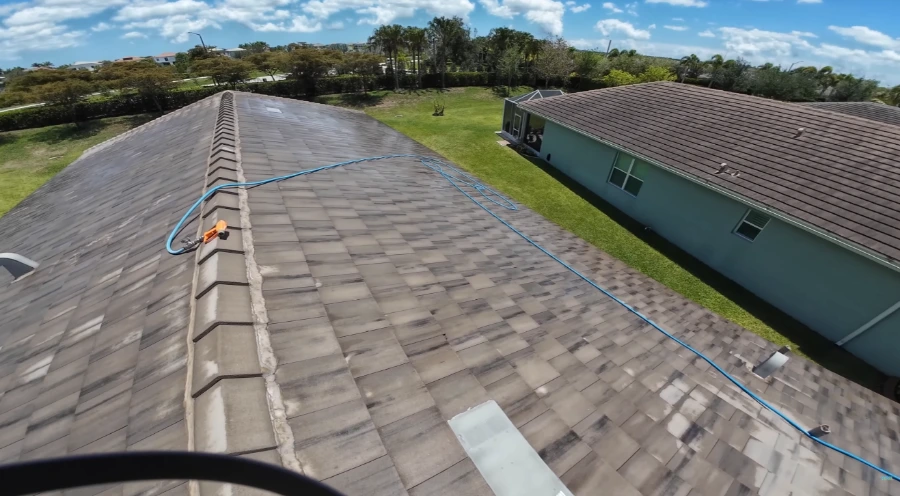
Jacksonville Roof Soft Wash Results
Real soft wash jobs on local asphalt and tile roofs — algae treated at the source, granules left intact.
HOA Ready
Roof Cleaning and HOA Compliance
Many Jacksonville area HOAs, particularly in newer communities like Nocatee and the nearby Julington Creek (32259) corridor, have exterior maintenance standards that include roof appearance, and black streaking is one of the most common triggers for a violation notice. We provide before and after photo documentation of completed roof cleaning service, which can be submitted to your HOA or property manager if proof of service is required. Soft washing is also how we handle roofs in Orange Park and across Jacksonville.
Insurance
Roof Condition and Your Florida Homeowners Insurance
Most Florida insurance carriers require a 4-point inspection, covering the roof, electrical, plumbing, and HVAC, before writing or renewing a policy on homes 15 to 20 years or older. That inspection documents visible roof conditions, including granule loss and algae staining, alongside overall age and remaining useful life. It isn’t accurate to say a dirty roof alone gets a policy cancelled, remaining useful life is the main factor an insurer weighs, but visible algae and granule loss are part of what gets documented and can influence that determination. Keeping a roof soft washed on a normal schedule is one small, low cost way to make sure a 4-point inspection reflects your roof’s actual condition rather than being weighed down by cosmetic buildup that looks worse than the roof’s real remaining life.
Cleaning improves appearance but does not repair roof damage or guarantee an insurance inspection outcome.
Can a dirty roof affect my homeowners insurance in Florida?
It can contribute to the picture. Florida insurers use a 4-point inspection for older homes that documents roof condition, including algae staining and granule loss, alongside the roof’s age and remaining useful life. The roof’s actual condition and remaining life are the primary factors, not appearance alone, but keeping algae growth under control means an inspection reflects your roof’s real condition rather than looking worse than it is.
FAQ
Frequently Asked Questions
What causes black streaks on a roof?
Black streaks on asphalt shingle roofs are caused by Gloeocapsa magma, an algae that feeds on the limestone filler in the shingles and thrives in humid climates. It’s a living organism, not dirt or soot.
Can pressure washing damage my roof?
Yes. High pressure water can strip the protective granules off asphalt shingles and force water underneath the shingle tabs, leading to leaks. Soft washing avoids both of these risks and is the correct method for roof cleaning.
How often should I clean my roof in Jacksonville?
Most asphalt shingle roofs benefit from soft washing every 3 to 4 years. Tile roofs generally go 4 to 5 years between cleanings. Homes under heavy tree canopy or near the coast often need it closer to the shorter end of that range.
How much does roof cleaning cost in Jacksonville?
Most roof soft washing jobs run between $300 and $700, depending on the size and pitch of the roof and how heavy the algae buildup is.
Will roof cleaning void my shingle warranty?
High pressure cleaning may conflict with manufacturer care instructions and could affect warranty coverage. Soft washing, done at low pressure with the correct chemical process, is the industry accepted method that avoids this risk.
Is it safe to walk on my roof during cleaning?
Roof access, if any is needed, is determined by the roof’s pitch, condition, and a safety assessment made on site, not a standard practice applied to every roof regardless of circumstances. As the homeowner, you don’t need to go on the roof at any point, before, during, or after the service.
Is moss different from algae, and does it matter?
Yes. Algae causes the black streaking most Jacksonville homeowners deal with and is described as a cosmetic issue rather than one with demonstrated structural impact. Moss is less common here but more structurally concerning where it appears, since it can lift shingle edges and allow water underneath them. Both are removed with the same low pressure soft wash method.
Can a dirty roof affect my homeowners insurance in Florida?
It can contribute to the picture. Florida insurers use a 4-point inspection for older homes that documents roof condition, including algae staining and granule loss, alongside the roof’s age and remaining useful life. The roof’s actual condition and remaining life are the primary factors, not appearance alone, but keeping algae under control means an inspection reflects your roof’s real condition.
Why is renting a pressure washer risky specifically for a roof?
Rental equipment doesn’t offer the pressure control or correct chemical dilution a roof actually needs, and there’s no way to calibrate it to a specific roof type on the spot. Over application streaks the shingles, and pressure damage to granules is permanent.
Ready for a safer roof clean?
Call for a free estimate on soft wash roof cleaning in Jacksonville and the First Coast.
Call +1 (904) 871-7193